
.avif)
Guaranteed to teach you things you never knew.
February 2026
How Photos Unlock Stories That Last | Key Takeaways from the February Remento Webinar
The February Remento Webinar brings together insights from Charlie Greene, Dr. Brian Levine, and Noam Eshel to explore how photos awaken memory, invite storytelling, and help families preserve the stories that give images their meaning.
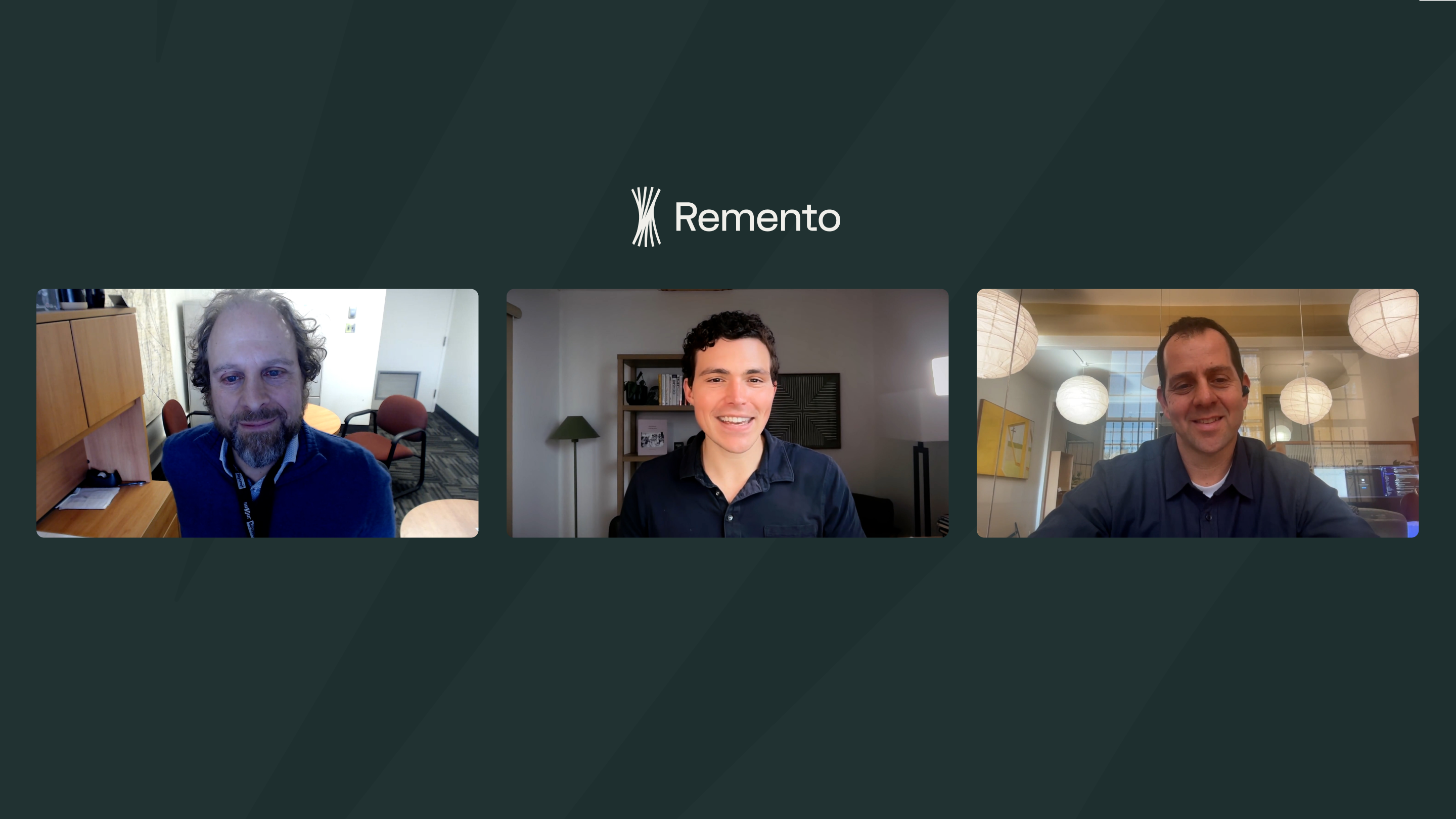

Photos do more than record what happened. They quietly hold what it felt like to be there. The February Remento Webinar explored this latent power by bringing together perspectives from memory science, photo preservation, and family storytelling. Through conversation with CEO and co-founder Charlie Greene, clinical neuropsychologist Dr. Brian Levine, and Photomyne Creative Director Noam Eshel, the session traced how images awaken memory, how physical photos can be protected from disappearance, and how the stories tethered to them can be carried forward across generations through Remento: a custom photo book that brings photo albums to life through stories and with voice.
Where Photos Become Stories Worth Keeping
Across families and generations, photos often survive long after the stories that once gave them meaning begin to fade. Albums remain while names are forgotten. Faces endure while contexts dissolve. The webinar opened with this shared tension, not as a single problem to be solved, but as a lived reality shaped by time, memory, and loss. By weaving together different disciplines, the conversation revealed how memory science, preservation, and storytelling are inseparable parts of the same human effort to hold on.
Charlie Greene grounded the discussion in what Remento has observed again and again while working with families: loss rarely announces itself in advance. It arrives quietly, often after the last chance to ask the questions that would have turned a photograph into a story has already passed.
“We built Remento because families kept telling us they wished they had asked certain questions before it was too late.”
Within this context, Remento emerged not as a replacement for memory, but as a way of meeting it where it lives. Stories can be captured gradually, spoken aloud instead of manually written, guided by prompts, and often anchored in photos themselves. Images sit with recorded reflections, strengthening the bond between what is seen and what is remembered.
Why the Brain Responds to Photos First, Insights from Dr. Brian Levine
To understand why images so often succeed where words falter, the webinar turned to the science of memory. Dr. Brian Levine explained that photos engage the brain through recognition rather than recall. Instead of searching for a memory, the brain responds to what it already knows. This process requires less cognitive effort and often yields memories that feel fuller and more immediate.
The visual system, Dr. Levine noted, is deeply intertwined with the regions of the brain responsible for memory and emotion. When someone looks at a photograph, the brain can quickly reactivate not just facts, but sensations, moods, and fragments of feeling that once accompanied the moment.
“A photo goes straight through the visual system into the memory centers of the brain and can trigger the emotions and sensations tied to that moment.”
Because of this, photos are particularly effective at surfacing memories tied to identity and formative periods of life. These memories are not always available on demand, but images can summon them with unexpected clarity. This makes photos a natural foundation for storytelling that aims to preserve meaning rather than assemble timelines.
Rescuing Family Photos from Boxes and Albums, Insights from Noam Eshel of Photomyne
If photos are such potent keys to memory, their disappearance carries real consequence. Many families’ most meaningful images still exist only as physical objects, tucked into photo albums, drawers, and boxes where they are vulnerable to damage or neglect. Noam Eshel addressed this fragility by focusing on what changes when photos are brought into the digital present.
Digitization, he explained, does more than preserve images. Once photos are scanned and organized, they become straightforward to revisit and share. In the act of seeing them again, people often notice expressions, relationships, and details that had gone unseen for years, simply because the images were out of reach.
“When people bring their physical photos into the digital present, they often rediscover details and connections they hadn’t thought about in years.”
Through Photomyne, families can digitize printed photos while keeping originals intact. This protects images from physical decline while making them accessible across devices. Preservation, however, is not the final step. When photos move from storage into daily life, they recover their ability to spark memory, conversation, and story.
Download Photomyne iOS link / Android link
Use the code WEBINAR to get 10 free AI credits with Photomyne before February 12, 2026
Letting Photos Lead the Story, Tips from Charlie Greene
The way a photo is approached shapes the story that follows. Charlie Greene encouraged families to slow down and allow images to invite reflection rather than treating them as records that need explanation. A photograph does not demand a caption. It asks a question.
He shared guidance for choosing photos that open deeper storytelling. Look for transitions instead of milestones, since change often carries more meaning than achievement. Notice what you do not yet know, because uncertainty is where reflection begins. Follow emotional resonance rather than visual perfection.
“The story isn’t the photo. The photo is just the doorway.”
Additional insights included letting children choose photos, since fresh eyes often uncover overlooked stories, and choosing images together to create shared reflection. Ordinary moments deserve attention because they reveal how life was actually lived. Meaning does not end with the image. It grows each time the memory is revisited and shared.
When a Photo Becomes the Question
Once photos are accessible and thoughtfully chosen, they begin to guide storytelling on their own. In Remento, prompts often emerge directly from images, allowing a single photo to serve as the invitation rather than the illustration.
Weekly Remento prompts arrive by email or text, each linking to a recording experience that works from any internet-connected device. Stories are recorded by voice through audio or video, with no writing required. Remento’s Speech-to-Story Technology™ transforms spoken reflection into written narrative.
“Photos can inspire memories that even the most carefully written question might never surface.”
Family members can participate by uploading photos and suggesting prompts, then receive notifications when new stories are recorded. This shared process helps surface meaningful moments and questions, while giving storytellers encouragement and momentum throughout the experience.
Turning Moments into Stories You Can Return To
As the conversation deepened, the focus shifted from capturing memories to understanding what happens when they are revisited. The discussion echoed ideas found in reminiscence and life review practices, where reflection supports meaning, identity, and connection.
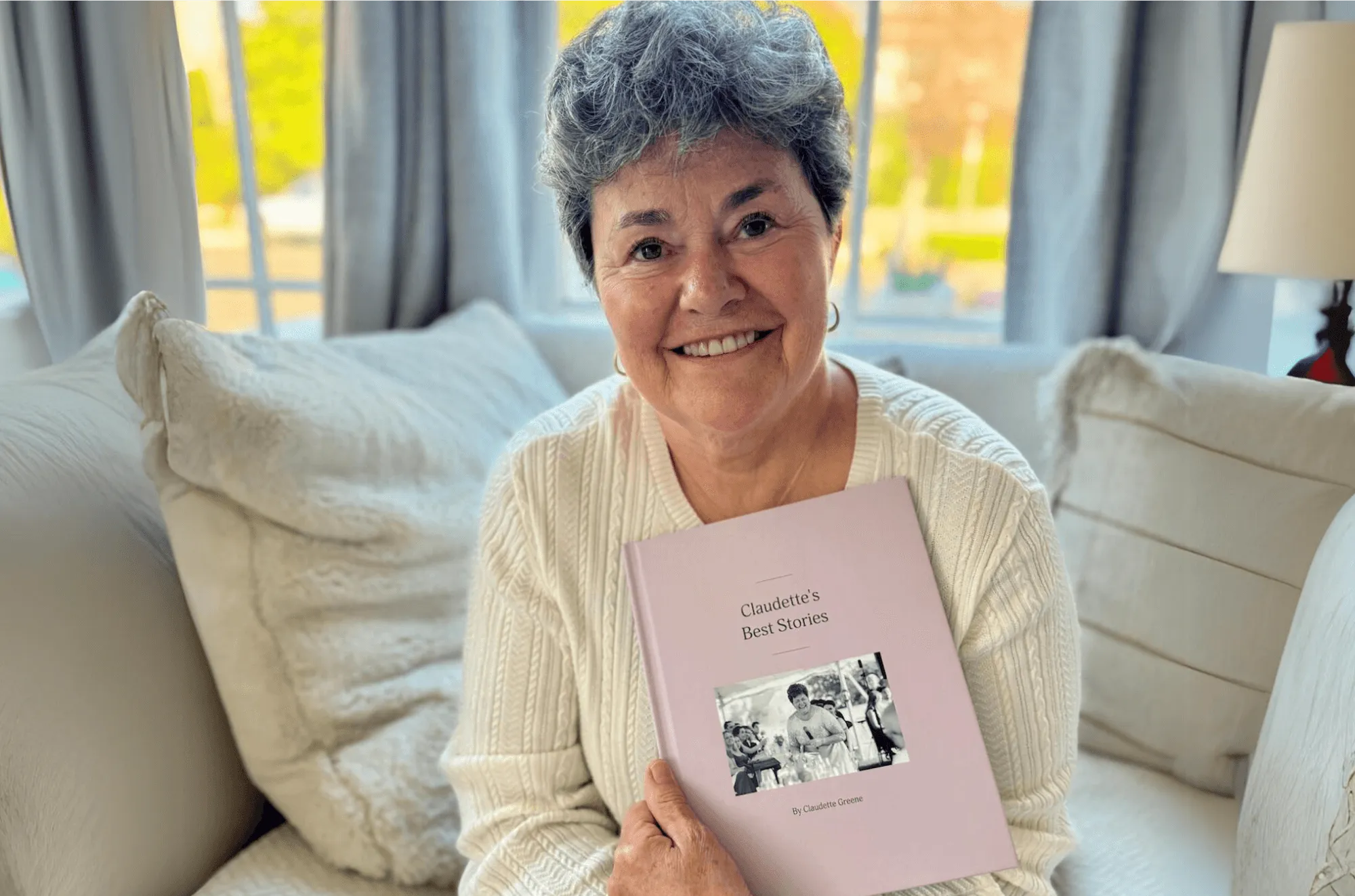
When photos are paired with spoken storytelling, memories move beyond captions and become narratives that can be returned to over time. With Remento, these stories are preserved in a custom photo book unlike any other, with QR codes linking back to audio and video recordings of the stories behind the pictures so future readers can hear the storyteller’s voice alongside the text.
“Preserving both photos and the stories behind them protects something far more enduring than an image.”
This combination of physical memory book and digital recording ensures that tone remains intact and personality comes through. The book becomes both an archive and an invitation, allowing each generation to encounter the stories in its own way.
Carrying Family Stories Forward
The February Remento Webinar brought together insights from neuroscience, photo preservation, and storytelling to examine what photos hold and what they risk losing. From the way images unlock memory to the importance of rescuing physical photos to the role storytelling plays in keeping meaning accessible, the session traced a cohesive arc grounded in lived experience.
Remento combines lasting preservation with meaningful connection in the present. With more than half a million stories already recorded, it brings families together by pairing photos with storytelling—creating a place where the people and moments behind those images continue to be felt, heard, and shared.
Start your Remento journey today.
Use the code WEBINAR at checkout to get $15 off your Remento purchase before February 12, 2026
Their stories, forever at your fingertips
Remento’s life story books turn a parent or grandparent’s memories of the past into a keepsake book for the future - no writing required.
Capture priceless family memories today
Join the thousands of families using Remento to preserve family history, all without writing a word.